Place of Origin: Ireland
Origin Date: Pre-Christian Celtic period, circa 300 BCE
Origin Date: Prominent in early Irish mythology, around the 1st millennium BCE
Religion: Celtic Paganism
Attributes: Love, youth, beauty, charm, poetic inspiration
Domain: Love, youth, poetry, music
Symbols: Birds (especially swans), harp, mistletoe
Epithets: Óengus or Aengus Óg, The Young God, Mac Óc (The Young Son), Macan Óc (The Young Boy)
Equivalents: Eros (Greek mythology), Cupid (Roman mythology), Mabon (Welsh), Maponos (Celtic)
Description
Aengus, also known as Aengus Óg (meaning "Aengus the Young"), is a central figure in Irish mythology, and a member of the Tuatha Dé Danann. He is the son of The Dagda and Boann.
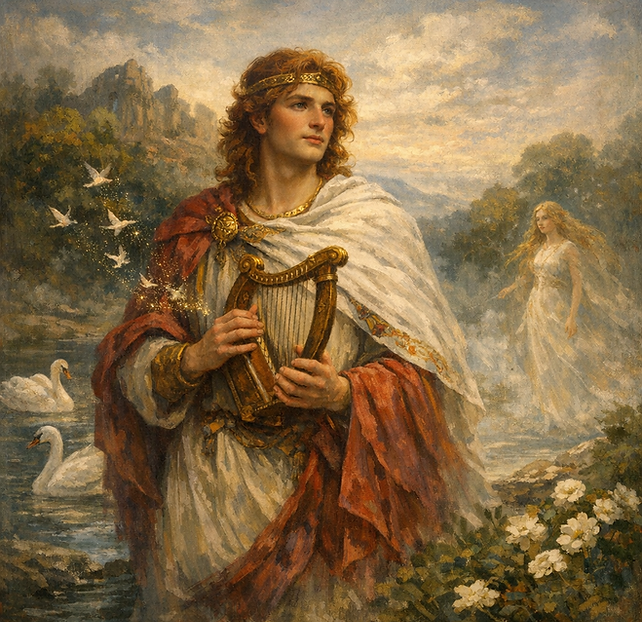
He is associated with love, youth, and poetic inspiration. Aengus is often depicted as a handsome young man and is closely linked with birds, particularly swans and other waterfowl. His enchanting music and poetic talents make him a beloved and romantic figure in Celtic lore. He resides at Brú na Bóinne and appears in many myths, including the tale of his love for Caer Ibormeith.
Aliases / Name Variants:
Óengus (Old Irish)
Aonghus (Gaelic)
Angus Mac Og / Mac Óg (title)
Iconography: Aengus is typically depicted as a youthful and attractive figure, often with birds (swans) and a harp, symbolizing his connection to love and poetry.
Worship Beliefs and Practices of Aengus
Aengus, also known as Óengus or Aengus Óg, is a prominent figure in Irish mythology, particularly among the Tuatha Dé Danann. He is revered as the god of love, youth, and poetic inspiration.
Core Beliefs
God of Love and Youth: Aengus is believed to be the god of love, youth, and poetic inspiration. His presence brings joy, beauty, and creativity to the world.
Son of The Dagda and Boann: Aengus is the son of The Dagda, the chief of the Tuatha Dé Danann, and Boann, the goddess of the River Boyne. This divine lineage grants him extraordinary abilities and a significant role in Irish mythology.
Protector and Healer: Aengus is known for his protective and healing qualities. He is often called upon to provide comfort, protection, and guidance to those in need.
Attributes and Significance
Depictions: Aengus is typically depicted as a youthful and attractive figure, often with birds and a harp, symbolizing his connection to love and poetry. He is also associated with swans, which are believed to be his messengers.
Cultural Hero: The stories of Aengus are passed down through generations, maintaining their significance in Irish culture and mythology. He is a symbol of love, youth, and poetic inspiration.
Magical Abilities: Aengus possesses magical abilities, including the power to shapeshift and the ability to transform kisses into birds. He is also known for his ability to resurrect the dead with his breath of life.
Practices of Worship
Rituals and Ceremonies: Devotees perform various rituals and ceremonies to honor Aengus. These include storytelling, dance, music, and the observance of sacred laws.
Sacred Sites: Brú na Bóinne, located in County Meath, is a significant site where rituals and ceremonies are performed to honor Aengus. This site is believed to be his dwelling place.
Offerings: Offerings of food, drink, and other goods are made to seek Aengus's favor and ensure the well-being of the community. These offerings symbolize gratitude and the desire for love and inspiration.
Festivals and Traditions
Cultural Celebrations: Aengus's story may be included in cultural celebrations and festivals that honor Irish heritage and traditions. These gatherings often include music, dance, and storytelling.
Seasonal Observances: The themes of Aengus's story, such as love and youth, may be reflected in seasonal observances and practices that align with the natural cycles of the environment.
Aengus's role as the god of love, youth, and poetic inspiration embodies the core values and beliefs of Irish mythology, emphasizing the importance of love, creativity, and the interconnectedness of life.
Relations: Son of the Dagda, the chief of the Tuatha Dé Danann, and Boann, the river goddess. Foster-father of Diarmuid Ua Duibhne. He is associated with various figures in Celtic mythology.
Narratives
The Birth of Aengus Óg
Aengus is born as the son of the Dagda and Boann. His birth is marked by the magical manipulation of time by the Dagda, who magically halts time to be with Boann and conceal their union. Aengus is born within a single day, symbolizing his connection to youth, vitality, and the timelessness of love.
Source: Dindshenchas (place-lore), specifically the poem on Brú na Bóinne. Also referenced in the Metrical Dindshenchas.
The Dream of Aengus (Aislinge Oenguso)
Aengus dreams of a beautiful maiden named Caer Ibormeith. He falls deeply in love with her and searches for her across Ireland. He becomes ill with longing for her, and his parents seek her identity. After a long quest, he finds her and discovers she transforms into a swan every other year. To be with her, Aengus transforms into a swan himself, and the two fly away together, embodying eternal love and unity.
Source: Aislinge Oenguso (“The Dream of Aengus”), a standalone medieval Irish tale. Preserved in Manuscript: Royal Irish Academy MS 23 N 10.
Aengus and Brú na Bóinne
Aengus tricks his father, the Dagda, into giving him Brú na Bóinne, a grand palace by the River Boyne.
Aengus asks to stay there for “a day and a night," but cleverly interprets this phrase as meaning forever, claiming the great palace as his own through wit and cleverness.
Source: Dindshenchas (Brú na Bóinne entry). Also referenced in the Metrical Dindshenchas.
The Fosterage of Diarmuid Ua Duibhne
Aengus becomes the foster‑father and protector of the warrior Diarmuid Ua Duibhne, a hero of the Fianna. When Diarmuid is pursued by the Fianna for eloping with Gráinne, Aengus aids them by providing refuge and offering guidance. After Diarmuid’s death, Aengus takes his body back to Brú na Bóinne, where he preserves it and occasionally breathes life into him whenever he wishes to speak with Diarmuid, demonstrating profound loyalty and affection.
Source: Tóraigheacht Dhiarmada agus Ghráinne(“The Pursuit of Diarmuid and Gráinne”). A major Fenian Cycle tale.
Aengus and the Swan Maidens
Aengus encounters a group of swan maidens who are cursed to remain in swan form. Using his magical abilities, he breaks the curse's enchantment and restores them to their human forms. This story emphasizes Aengus's role as a benevolent and compassionate deity.
Source: Variant folklore and later medieval retellings.
The Rescue of Étaín
Aengus aids his father, the Dagda, in rescuing Étaín from the clutches of Midir’s schemes. His wisdom and diplomacy help navigate the complex conflicts among the Tuatha Dé Danann, showing his role as a mediator and problem‑solver.
Source: Tochmarc Étaíne (“The Wooing of Étaín”). A major myth involving Midir, Étaín, and the Dagda.
The Tyranny of Bres
During the Second Battle of Moytura, Aengus offers counsel and support to the Tuatha Dé Danann. His wisdom saves the Dagda from starving to death and contributes to the eventual overthrow of Bres’s oppressive rule.
Source: Cath Maige Tuired (“The Second Battle of Moytura”). Aengus plays a supporting role, offering counsel and aid.
The Death of Elcmar
In some traditions, Aengus avenges the death of his foster‑father Midir by killing his stepfather Elcmar. This tale underscores his fierce loyalty and willingness to defend those he loves.
Source: Variant traditions connected to the Dindshenchas and later medieval commentary.
Sacred Texts: References in various Celtic myths and legends

