Understanding Universal Laws: The Essence of Cosmic Principles


In the vast expanse of the universe, there exist certain immutable principles known as Universal Laws. Governing every aspect of existence—from the tiniest subatomic particles to the grandest galaxies—these fundamental truths transcend time, space, and dimension. Understanding these laws can profoundly impact our lives, guiding us toward greater harmony, fulfillment, and spiritual growth.
1. The Law of Divine Oneness
This is the foundational law upon which all other Universal Laws are built. It states that everything in the universe is interconnected and interdependent. Every thought, action, and event is linked to everything else. This law emphasizes the importance of recognizing our unity with all that exists, encouraging compassion, empathy, and a sense of belonging.

2. The Law of Vibration
According to this law, everything in the universe vibrates at its own unique frequency. This includes physical objects, thoughts, emotions, and even our bodies. By understanding and harnessing the power of vibration, we can attract positive experiences and manifest our desires. It reminds us that we have the power to change our vibrational frequency through our thoughts, words, and actions.

3. The Law of Correspondence
The Law of Correspondence is often encapsulated in the phrase "As above, so below; as below, so above." This means that there is harmony, agreement, and correspondence between the physical, mental, and spiritual planes. By understanding this law, we can gain insights into the workings of the universe and our own lives. It teaches us that the patterns and cycles we observe in the macrocosm are reflected in the microcosm and vice versa.

4. The Law of Attraction
Popularized by the book "The Secret," the Law of Attraction states that like attracts like. Our thoughts and emotions act as magnets, drawing in experiences that match our vibrational frequency. By focusing on positive thoughts and feelings, we can attract abundance, love, and success. This law emphasizes the power of the mind and the importance of maintaining a positive mindset.

5. The Law of Inspired Action
While the Law of Attraction is about manifesting desires through thought and emotion, the Law of Inspired Action is about taking steps towards those desires. It reminds us that we must act upon our intentions and follow our instincts to achieve our goals. Inspired action is often guided by intuition and a sense of purpose, leading us towards our highest good.

6. The Law of Perpetual Transmutation of Energy
This law states that energy is constantly in motion and can be transformed from one form to another. High-vibrational energy can change lower-vibrational energy into something more positive. By understanding this law, we can learn to harness our energy for personal transformation and growth. It teaches us that we have the power to change our circumstances by shifting our energy and mindset.

7. The Law of Cause and Effect
Also known as the Law of Karma, this principle states that every action has a corresponding reaction. Our thoughts, words, and deeds create a ripple effect that impacts our lives and the lives of others. By understanding this law, we become more mindful of our actions and their consequences, encouraging us to live with integrity and compassion.

8. The Law of Compensation
This law is closely related to the Law of Cause and Effect. It states that we are rewarded or compensated for the energy and effort we put into our lives. Whether it be through good deeds, hard work, or generosity, the universe ensures that we receive what we deserve. This law reminds us that everything we give will eventually come back to us, often in unexpected ways.

9. The Law of Relativity
The Law of Relativity states that everything is relative and that our perception of reality is influenced by our point of view. It teaches us that there is no absolute good or bad, big or small; everything is relative to something else. By understanding this law, we can develop a more balanced and compassionate perspective, recognizing that our challenges and successes are relative to our own experiences.

10. The Law of Polarity
This law states that everything has its opposite. Light and dark, love and fear, hot and cold—all are examples of polarities. The Law of Polarity teaches us that these opposites are necessary for our understanding and growth. By embracing the duality of existence, we can learn to appreciate the full spectrum of life and find balance within ourselves.

11. The Law of Rhythm
The Law of Rhythm states that everything in the universe follows a natural cycle or rhythm. This can be observed in the changing seasons, the phases of the moon, and the ebb and flow of the tides. By understanding this law, we can align ourselves with the natural rhythms of life, recognizing that there is a time for everything. This law teaches us to be patient and trust the process, knowing that change is a constant part of existence.

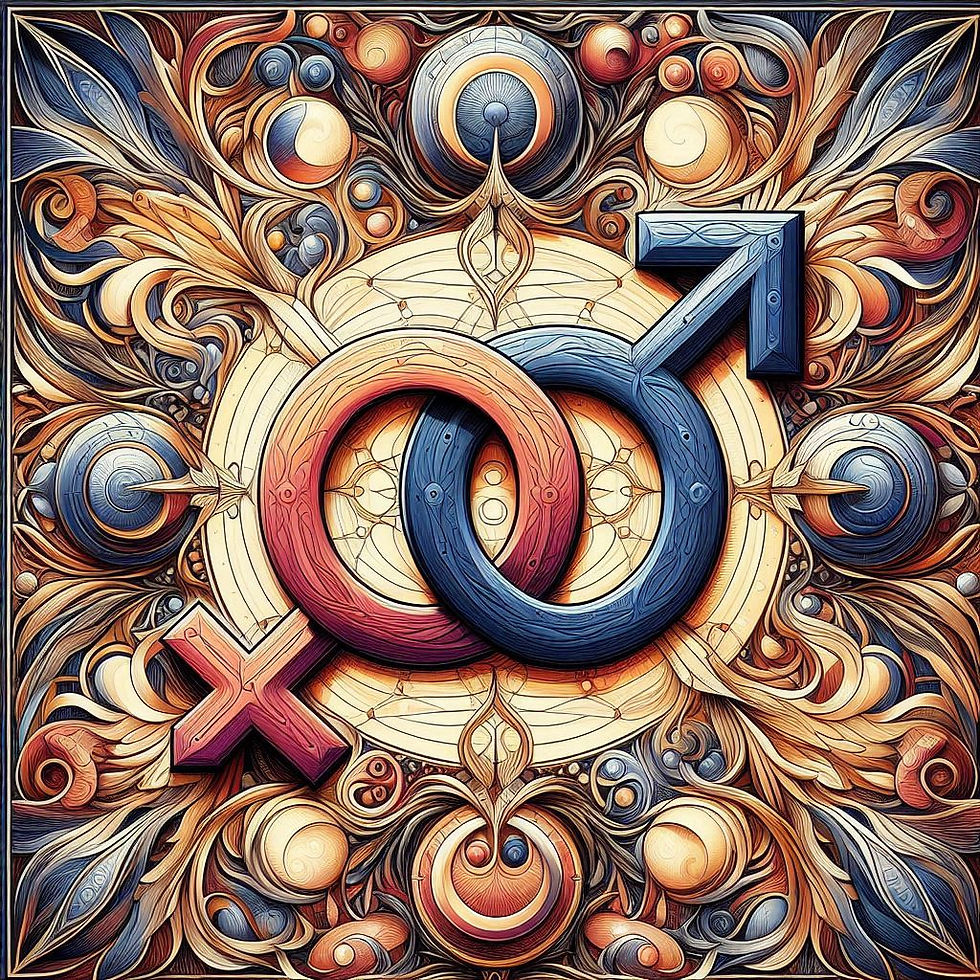
12. The Law of Gender
This law states that everything in the universe has both masculine and feminine energies. The Law of Gender teaches us that these energies are complementary and necessary for creation and balance. By understanding and embracing both aspects within ourselves, we can achieve harmony and wholeness. This law reminds us that both masculine and feminine qualities have value and play essential roles in our lives.
Additional Universal Laws:
While many teachings often reference 12 Universal Laws, it's important to recognize that these cosmic principles are not set in stone. The inclusion of two additional laws in this article offers a more comprehensive understanding of the universe's fundamental truths. These extra laws complement the commonly known 12 laws and provide further insights into achieving balance and harmony in our lives.
13. The Law of Balance
This law states that everything in the universe strives for balance. It teaches us that equilibrium is essential for harmony and that maintaining balance in various aspects of our lives—such as work and leisure, giving and receiving, and physical and spiritual pursuits—leads to a more fulfilling existence.

14. The Law of Reflection
This law suggests that the outer world reflects our inner state. Our experiences and interactions with others are a mirror of our thoughts, beliefs, and emotions. By understanding this law, we can use our external environment as a tool for self-awareness and personal growth.

By including these additional laws, we gain a richer and more nuanced understanding of the cosmic principles that govern our existence. Embracing these expanded perspectives allows us to align more deeply with the natural order of the universe and tap into its infinite potential.
Historical and Cultural Perspectives:
Exploring the origins and significance of Universal Laws across various cultures and historical contexts reveals their timeless and universal nature. These laws have been recognized and revered in ancient philosophies and continue to hold relevance in modern interpretations.
Ancient Egypt:
The ancient Egyptians believed in Ma'at, the principle of truth, balance, order, harmony, law, morality, and justice. Ma'at was personified as a goddess who regulated the stars, seasons, and the actions of mortals and deities. The concept of Ma'at reflects the Universal Laws of Balance and Harmony, emphasizing the importance of living in accordance with cosmic order.

Ancient Greece:
Greek philosophers such as Plato and Aristotle explored the idea of a universal order governing the cosmos. Plato's Theory of Forms and Aristotle's concept of the "unmoved mover" both reflect the belief in fundamental principles underlying the physical world. These ideas align with the Universal Laws of Oneness, Vibration, and Correspondence, highlighting the interconnectedness and underlying unity of all existence.

Eastern Philosophies:
In Hinduism, the concept of Dharma represents the cosmic law and order, guiding individuals to live in harmony with the universe. Similarly, Buddhism teaches the Law of Karma, which emphasizes the principle of cause and effect. These concepts align with various Universal Laws, such as the Law of Cause and Effect and the Law of Perpetual Transmutation of Energy, emphasizing the importance of living in accordance with cosmic principles.

Indigenous Cultures:
Many Indigenous cultures around the world have long recognized and respected the Universal Laws. For example, Native American traditions emphasize the interconnectedness of all living beings and the importance of living in harmony with nature. These beliefs resonate with the Law of Oneness and the Law of Rhythm, underscoring the significance of maintaining balance and honoring natural cycles.

Modern Interpretations:
In contemporary times, the Universal Laws have been popularized through various books, teachings, and spiritual movements. The New Thought movement, which emerged in the late 19th and early 20th centuries, emphasized the power of positive thinking and the Law of Attraction. Modern interpretations continue to draw upon ancient wisdom while integrating scientific insights, such as quantum mechanics and energy conservation, to provide a comprehensive understanding of these cosmic principles.

Scientific Correlations:
Exploring the connections between Universal Laws and scientific principles, such as quantum mechanics, energy conservation, and physics, can provide a deeper understanding of how these cosmic principles manifest in the physical world.
Quantum Mechanics and the Law of Vibration:
Quantum mechanics, a fundamental theory in physics, reveals that everything in the universe is composed of energy and vibrates at specific frequencies. This aligns with the Law of Vibration, which states that everything in existence vibrates and that these vibrations influence our reality. Quantum entanglement, a phenomenon where particles remain connected and instantly affect each other regardless of distance, exemplifies the interconnectedness emphasized by Universal Laws.
Energy Conservation and the Law of Perpetual Transmutation of Energy:
The Law of Conservation of Energy, a core principle in physics, states that energy cannot be created or destroyed but only transformed from one form to another. This is closely related to the Law of Perpetual Transmutation of Energy, which asserts that energy is in constant motion and can change from one form to another. Understanding these principles helps us recognize the dynamic and ever-changing nature of energy in the universe.
The Law of Polarity and Symmetry in Physics:
In physics, the concept of symmetry plays a crucial role in understanding fundamental forces and particles. The Law of Polarity, which states that everything has its opposite (e.g., light and dark, positive and negative), aligns with the idea of symmetry. For example, in particle physics, particles have corresponding antiparticles, reflecting the balance and duality present in the universe.
Electromagnetic Fields and the Law of Attraction:
Electromagnetic fields, generated by electrically charged particles, create forces that attract or repel other charged particles. This scientific principle resonates with the Law of Attraction, which posits that like attracts like. Just as opposite charges attract and similar charges repel in electromagnetic fields, our thoughts and emotions can attract experiences and outcomes that match their vibrational frequency.
Relativity and the Law of Correspondence:
Einstein's Theory of Relativity, which revolutionized our understanding of space, time, and gravity, echoes the Law of Correspondence. The phrase "as above, so below; as below, so above" encapsulates the idea that the patterns and principles observed in one realm correspond to those in another. Relativity teaches us that our perception of reality is influenced by our frame of reference, highlighting the interconnectedness of different levels of existence.
Common Misconceptions:
Addressing any common misunderstandings or myths about Universal Laws and providing clarifications is essential to ensure accurate comprehension and application.
Myth 1: Universal Laws Only Apply to Spiritual Practices
Clarification: Universal Laws are not limited to spiritual practices. They govern all aspects of existence, including physical, mental, emotional, and spiritual realms. These laws offer valuable insights and principles that can be applied to everyday life, personal growth, relationships, and professional endeavors.
Myth 2: The Law of Attraction is the Only Important Law
Clarification: While the Law of Attraction is a widely known and powerful law, it is just one of many Universal Laws. Each law serves a unique purpose and plays a crucial role in creating a harmonious and fulfilling life. Understanding and aligning with multiple Universal Laws can lead to a more comprehensive and balanced approach to life.
Myth 3: Universal Laws are Fixed and Unchangeable
Clarification: Although Universal Laws are fundamental principles, our understanding and interpretation of them can evolve. These laws are dynamic and adaptable to different situations and contexts. By remaining open-minded and flexible, we can gain deeper insights and apply these laws more effectively.
Myth 4: Universal Laws Guarantee Immediate Results
Clarification: While aligning with Universal Laws can create positive changes, it is important to understand that results may not always be immediate. Patience, persistence, and consistent effort are essential for manifesting desired outcomes. Trusting the process and allowing time for the natural flow of events is key to achieving long-term success.
Using the Universal Laws in Daily Life
By applying the Universal Laws in our daily lives, we can create a more harmonious, fulfilling, and spiritually enriched existence. Here are some practical ways to incorporate these laws into your everyday routine:
Mindfulness and Meditation:
Practice mindfulness and meditation to align with the Law of Divine Oneness and the Law of Vibration. These practices help you become more aware of your thoughts, emotions, and actions, allowing you to raise your vibrational frequency.

Positive Affirmations:
Use positive affirmations to harness the Law of Attraction. Focus on your desires and visualize them coming to fruition. This will help you attract positive experiences and opportunities into your life.

Inspired Action:
Follow your intuition and take inspired action towards your goals. The Law of Inspired Action reminds us that thoughts and emotions must be accompanied by purposeful actions to manifest our desires.

Self-Reflection:
Regularly reflect on your actions and their consequences. The Law of Cause and Effect encourages us to be mindful of our deeds and strive to live with integrity and compassion.

Gratitude and Generosity:
Practice gratitude and generosity to align with the Law of Compensation. By appreciating what you have and giving to others, you create a positive flow of energy that will return to you in various forms.

Embrace Change:
Accept and embrace the natural rhythms and cycles of life. The Law of Rhythm teaches us to trust the process and remain patient, knowing that change is inevitable and necessary for growth.

Balance Masculine and Feminine Energies:
Cultivate a balance between your masculine and feminine energies. The Law of Gender reminds us that both qualities are essential for harmony and wholeness.

Conclusion: Embracing the Universal Laws
Understanding and aligning with the Universal Laws can lead to a more harmonious and fulfilling life. These cosmic principles offer a roadmap for navigating the complexities of existence, providing wisdom and insights that can transform our lives. By embracing these laws, we cultivate greater awareness, compassion, and purpose, allowing us to tap into the infinite potential of the universe. May we all strive to live in harmony with these timeless truths and unlock the profound possibilities they hold.
Resources:
For readers who want to explore more about the Universal Laws, here are some suggestions for further reading and resources:
Books:
Ask and It Is Given: Learning to Manifest Your Desires by Esther Hicks.
The Law of Attraction: The Basics of the Teachings of Abraham by Esther Hicks.
The Seven Spiritual Laws of Success: A Practical Guide to the Fulfillment of Your Dreams by Deepak Chopra.
Kybalion: A Study of the Hermetic Philosophy of Ancient Egypt and Greece by Three Initiates.
Your Life: Why It Is the Way It Is and What You Can Do About It - Understanding the Universal Laws by Bruce McArthur.
Articles:
Affiliate Disclosure: This post contains affiliate links. If you click through and make a purchase, I may earn a commission at no additional cost to you. Thank you for your support!


Comments